Crisis Communication Strategy
Managing communication, media, and stakeholder response in high-pressure situations.
Developed a structured crisis communication framework based on a real-world football scenario, focusing on rapid response, message control, and maintaining trust during critical moments.
Project Overview
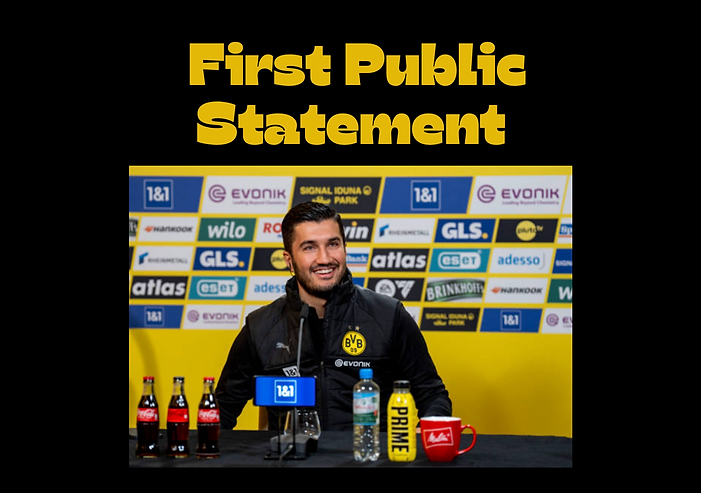
This project was developed around a real-world crisis scenario involving the Borussia Dortmund team bus attack, focusing on how a professional football club should respond in real time. The objective was to design a communication strategy that ensures clarity, responsibility, and empathy while managing media narratives and stakeholder expectations.
The Challenge
In crises, organizations must respond instantly while managing uncertainty, controlling misinformation, and maintaining public trust. Communication must be clear, coordinated, and sensitive to the emotional impact on players, staff, and fans.
The challenge was to design a structured response that ensures consistent messaging across all channels while balancing speed, accuracy, and empathy.
The Strategy
The response was structured around a phased communication framework to ensure clarity, coordination, and control at every stage of the crisis.
Immediate Assessment & Coordination
Establish internal alignment and define roles within the crisis communication team.
Stakeholder Communication
Ensure clear and direct communication with players, staff, authorities, and families.
Public Messaging
Deliver controlled, empathetic statements to media and the public.
Media & Social Monitoring
Track information flow, counter misinformation, and maintain message consistency.
Ongoing Support
&
Recovery
Integrate psychological support and maintain communication beyond the initial incident.
Execution
The strategy was implemented through a structured, time-based response that defined clear roles, communication priorities, and messaging across different stages of the crisis. Each phase focused on maintaining information control, ensuring consistency, and supporting stakeholders both operationally and emotionally.

Key Takeaways
-
Speed and clarity are essential in crisis response
-
Communication must balance information with empathy
-
Strong internal coordination reduces confusion and risk
-
Media narratives must be actively managed
-
Crisis communication extends beyond the initial incident