Bridging the Gap: Advocating for Equality in Real Madrid's Women's Sports Programs
- jbgazzaz
- Feb 26, 2025
- 3 min read
Real Madrid, a club synonymous with athletic excellence in men’s football and basketball, has long been a beacon of sporting achievement. However, a closer examination reveals a significant discrepancy in the resources and support allocated to its women’s teams. While the men’s teams benefit from state-of-the-art facilities, dedicated housing, and comprehensive academies, the women’s teams often operate under less favorable conditions. This discrepancy underscores the urgent need for equitable treatment and investment in women’s sports within the club. Real Madrid is one of the leading institutions in Spanish football and is thus expected to serve as an example in promoting equality in sports.
Training Facilities and Housing
The men’s and women’s football teams train at Ciudad Real Madrid, a facility that includes multiple full-size natural grass and synthetic turf fields and a residential building for the first team. The building features 57 rooms, a cinema, dining areas, and a climate-controlled pool.
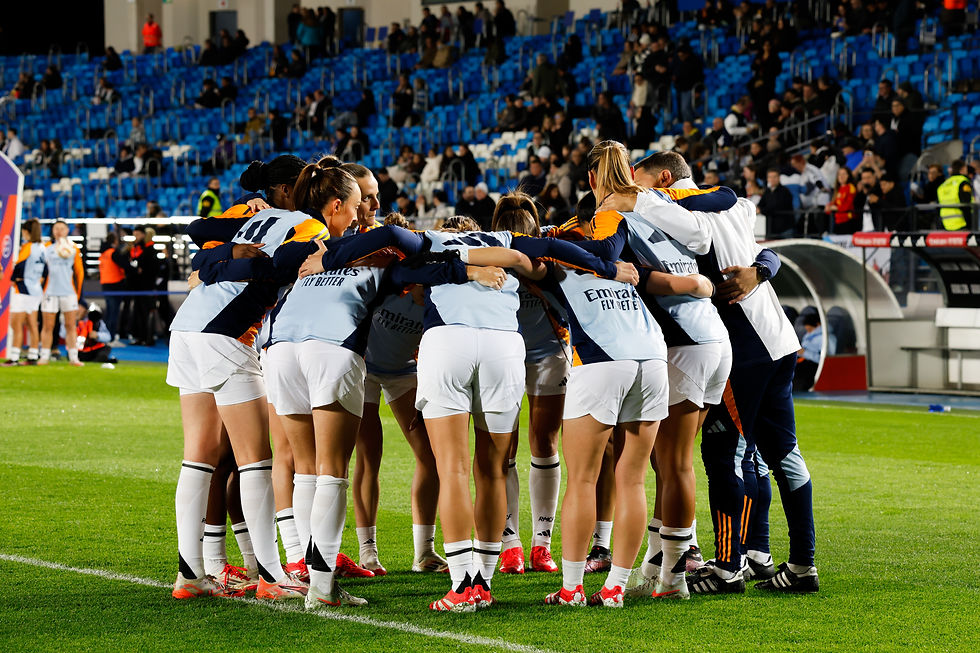
In contrast, Real Madrid Femenino does not have a dedicated residential facility within the Ciudad Real Madrid complex. While they also train and play home games in these facilities, there are no women’s residential halls. Their games are played at the Alfredo Di Stéfano Stadium, a venue in Ciudad Real Madrid with a capacity of 6,000.
On the other hand, FC Barcelona heavily invests in its women’s teams. Their investment in FC Barcelona Femení has not only led to athletic excellence but has also set off a ripple effect throughout women's football globally. FC Barcelona Femení is equipped with professional facilities, medical staff, and training resources equivalent to those of the men’s team. They have financial backing, sponsorship deals, and increased wages that have helped solidify this team as one of the best in the world. While they play their regular home games at Estadi Johan Cruyff, which seats 6,000 people, in the club’s training facilities in Sant Joan Despí, they play their high-profile matches, such as UEFA Women’s Champions League knockout games or El Clásico, at the Spotify Camp Nou, with over 90,000 fans coming to support.
By prioritizing professional facilities, elite-level coaching, and comprehensive support systems, Barcelona has demonstrated that a successful women's program can flourish when backed by the same resources and attention as its male counterparts.
Academies and Development Programs
Behind this lies La Fábrica (The Factory), the men’s football academy recognized for producing top talents aided by the extensive facilities at Ciudad Real Madrid. The academy offers young players comprehensive training, education, and housing, ensuring their development on and off the field.
In contrast, the women’s football academy operates under more constrained conditions. While the club has made strides toward establishing a women’s team, the resources and infrastructure dedicated to developing female athletes lag behind those available to male athletes.
FC Barcelona invests in its youth programs. La Masia remains one of the top football academies in the world. While this youth development program has produced players such as Lionel Messi, Xavi, and Iniesta, this club has not forgotten about women. In 2015, Barça started providing female players access to the same elite development environment as the men’s youth teams. Young female talents can live and train at La Masia, getting top coaching, education, and medical support. This team competes in Primera Federación, Spain’s second division of women’s football, which bridges the gap between youth football and the first team. As a result, many top players, including Aitana Bonmatí (2023 Ballon d’Or winner, UEFA Women’s Player of the Year) and Claudia Pina, developed in Barça B before making the senior squad.
The Need for Equitable Investment
The discrepancies in facilities, housing, and development programs between the men's and women's teams at Real Madrid reflect broader societal inequalities in sports. Investing in women's sports is a strategic opportunity to tap into a growing market and inspire future generations of female athletes.
More investment in women's sports automatically leads to higher participation rates, better performances, and greater fan engagement. For instance, the recent successes of the Spanish women's national football team have sparked increased interest and participation nationwide.
Conclusion
Real Madrid must take alert from its rival’s success. To show values of excellence and pride in being the best, they must extend this commitment to equality in resources, facilities, and support for its women’s teams, on par with those for its men's teams. That can enable Real Madrid to set a compelling example of gender equality in sports, inspiring countless young female athletes while contributing to the global movement for equal opportunities in athletics. Real Madrid can solidify its status as being truly elite. Investing in women's athletics is not just a matter of fairness; it is a strategic choice that can produce remarkable returns in performance, reputation, and social impact.


